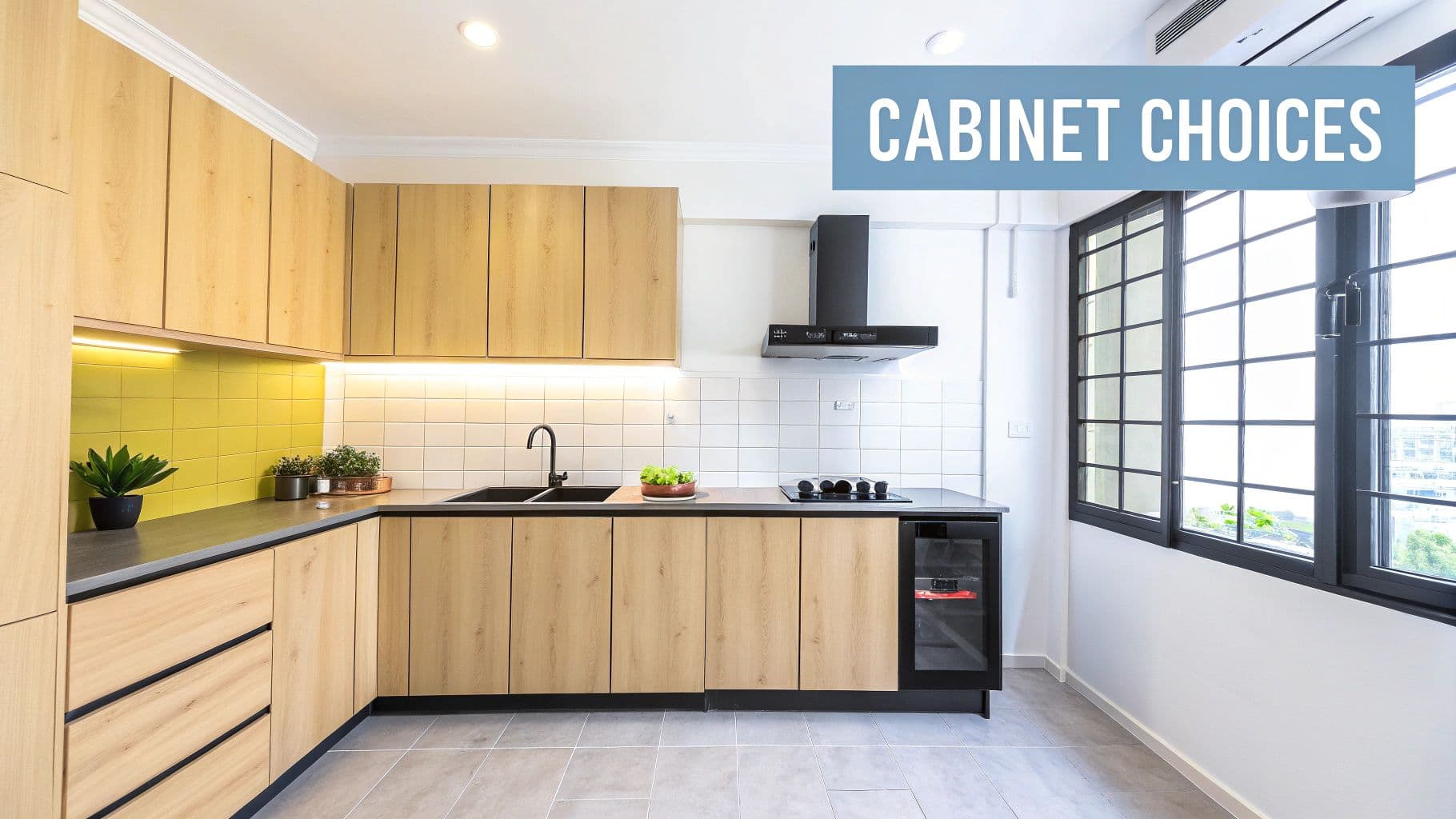
The Complete Guide to Kitchen Cabinet Materials for Singapore’s Humid Climate
The Complete Guide to Kitchen Cabinet Materials for Singapore’s Humid Climate
Choosing the right material for your kitchen cabinets can make or break your renovation. In Singapore’s relentless humidity, the wrong choice leads to swollen doors, peeling laminate, and a musty smell. This guide covers every material – from the carcass to the door finish – so you can make an informed decision.
Why Material Matters So Much in Singapore
Kitchens in HDB flats and condos are often small, with limited ventilation. Steam from cooking, occasional water splashes, and the ambient humidity (averaging 80%) create a tough environment for cabinetry.
- Poor materials absorb moisture and warp
- Cheap laminate edges peel, exposing the core
- Mould and mildew can grow inside swollen boards
Cabinet Body (Carcass) Materials
### 1. Plywood (The Gold Standard)
Plywood consists of multiple thin layers of wood veneer glued under high pressure. E1‑grade plywood is the industry standard in Singapore.
- Moisture‑resistant: specially graded for tropical climates
- High screw‑holding strength: can support heavy countertops
- Durable lifespan: 15‑20 years with minimal maintenance
- Low formaldehyde emission: safe for indoor air
### 2. Blockboard
Blockboard has a core of solid softwood strips sandwiched between veneers.
- Cheaper than plywood
- Good for low‑moisture areas like wardrobes
- Not recommended for kitchens – the core can swell if water penetrates
### 3. Particle Board / Chipboard
Made from wood chips and resin, particle board is common in budget modular furniture.
- Extremely affordable but highly susceptible to water damage
- Only suitable if fully sealed and never exposed to steam
- Lifespan: 3‑5 years in a kitchen
Door Front Materials & Finishes
| Material | Appearance | Durability | Maintenance | Cost |
|---|---|---|---|---|
| Laminate (Matt/Gloss) | Wide range – woodgrain, solid colours | High – scratch‑resistant | Easy – wipe with damp cloth | Moderate |
| Acrylic | Mirror‑like high‑gloss | Moderate – can scratch | Use microfibre cloth | High |
| Solid Wood Veneer | Natural grain, warm | Moderate – can warp | Needs humidity control | High |
| Fenix NTM | Ultra‑matt, fingerprint‑proof | Very high | Self‑healing micro‑scratches | Premium |
| Glass (Tempered) | Sleek, reflective | High (tempered) | Prone to fingerprints | Moderate‑High |
What We Recommend at Reno & Remodel Carpentry
For every Singapore kitchen, we use E1‑grade plywood for carcasses and doors. It’s the safest, most durable base. The final finish depends on your style:
- Daily heavy cooking → Laminate (easy to clean, hides scratches)
- Modern glossy look → Acrylic on plywood (moisture‑proof backing)
- Warm, organic feel → Wood veneer (sealed with UV‑resistant lacquer)
Edge‑Banding: The Unsung Hero
Even the best board can fail if the edges are poorly sealed. We use 2mm thick ABS edge‑banding (not thin PVC) that resists peeling and moisture ingress.
Common Mistakes to Avoid
- Using particle board to save money – it will fail within 2‑3 years.
- Choosing solid wood for the sink cabinet – even marine ply is better.
- Ignoring ventilation – leave a gap behind cabinets to prevent trapped moisture.
- Overlooking soft‑close hinges – they extend the life of doors dramatically.
See the Materials for Yourself
Visit our showroom at 6 Gambas Way #07‑02 Singapore 756939 – we have full sample boards of every material. Call +65 8092 6533 to arrange a free consultation.