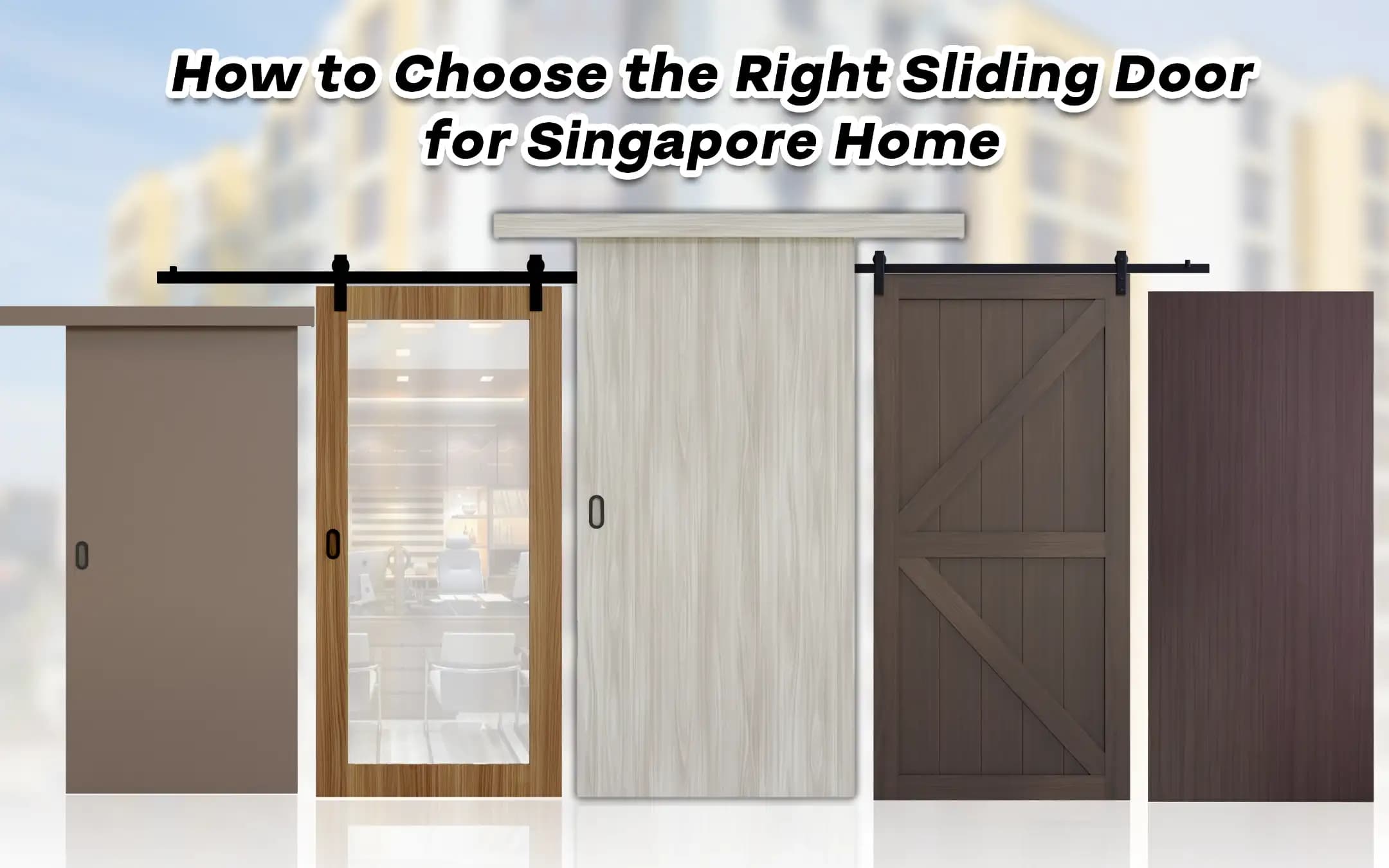
Sliding Doors 101: Types, Uses, and Maintenance for Singapore Homes
Sliding Doors 101: Types, Uses, and Maintenance for Singapore Homes
Sliding doors save valuable floor space, but not all sliding doors are created equal. This guide covers the five main types, where they work best, and how to keep them gliding smoothly.
Why Sliding Doors Are Perfect for Singapore
Most HDB and condo rooms are compact. A swinging door needs about 60‑70cm of clear space in front – a sliding door needs zero. That’s why they’re ideal for:
- Wardrobes in small bedrooms
- Kitchen entrances
- Bathrooms and toilets
- Room partitions
The 5 Main Types of Sliding Doors
### 1. Top‑Hung Sliding Doors
The door hangs from a ceiling‑mounted track, with only a small floor guide.
- Best for: wardrobes, partitions, kitchen doors
- Pros: no bottom track to trip over; easy to clean floor
- Cons: needs a sturdy header to support weight
### 2. Bottom‑Roller Sliding Doors
The weight rests on rollers at the bottom, running along a floor track.
- Best for: heavy glass balcony doors
- Pros: handles very heavy panels
- Cons: floor track can collect dust and hair
### 3. Pocket Doors
These slide completely into a wall cavity, disappearing when open.
- Best for: small bathrooms, tight corridors
- Pros: ultimate space saving
- Cons: installation requires hacking the wall to create the pocket
### 4. Bypass Doors
Two or more panels slide past each other on separate tracks (common in wardrobes).
- Best for: wide wardrobe openings, walk‑in closets
- Pros: good for large openings
- Cons: you can only access one section at a time
### 5. Bi‑Fold Sliding Doors
Panels fold in pairs and slide to one side. Lightweight and space‑efficient.
- Best for: toilet entrances, pantries
- Pros: almost fully open when folded
- Cons: more moving parts, can feel flimsy if cheaply made
Which Type Should You Choose?
- Bedroom wardrobe: top‑hung bypass with soft‑close
- Bathroom: PVC or aluminium bi‑fold (budget) or glass pocket door (premium)
- Living room partition: top‑hung with frosted glass
- Balcony: heavy‑duty bottom‑roller with tempered glass
Maintenance Tips for Long‑Lasting Performance
- Vacuum tracks monthly – use a crevice tool.
- Lubricate rollers with silicone spray every 6 months.
- Check alignment – if the door scrapes, adjust the roller height.
- Clean glass panels with a soft cloth and mild cleaner.
When to Call a Professional
If your sliding door derails, makes a grinding noise, or the soft‑close mechanism fails, don’t force it. You may bend the track or break a roller. Reno & Remodel Carpentry offers fast sliding door repair island‑wide. Call +65 8092 6533.